
I still remember the receipt. It was a crisp Saturday morning, and I had just dropped twenty-five dollars on a bright neon alligator toy that was loudly marketed as "indestructible." It had reinforced seams, ballistic nylon, and a layer of Kevlar-like material. I handed it to Buster, my golden retriever mix, with a smug sense of victory. I walked to the kitchen, brewed a cup of coffee, and walked back. Three minutes. That is all it took. The living room looked like a synthetic snow globe had exploded. Buster sat in the middle of the fluff, holding the squeaker like a trophy. I was out twenty-five bucks, and my vacuum cleaner was about to face its worst nightmare.
If you have a dog, you have lived this story. We buy these objects hoping they will buy us an hour of peace, or maybe keep our dogs from chewing the baseboards. Instead, we end up cleaning up debris and worrying about intestinal blockages. Over the years, through trial, error, and a lot of conversations with vets, I have learned that navigating the world of dog toys is less about finding a magic, indestructible object and more about understanding how your specific dog interacts with their world.
The Day the "Indestructible" Dino Died (And Why They Destroy Things)
Let's get one thing straight right away: no toy is truly indestructible. If a manufacturer claims their toy is completely immune to a dog's teeth, they are either lying or the toy is made of something so hard it will break your dog's premolars. Dogs have incredible jaw strength. A medium-sized dog can easily exert over two hundred pounds of pressure per square inch. When you combine that force with persistent, repetitive gnawing, almost anything will give way eventually.
But why do they want to destroy their toys in the first place? It is not out of malice. It is instinct. To our dogs, that fuzzy, squeaking plush toy is not a cute character. It is prey. The high-pitched squeak mimics the sound of a small, injured animal. When your dog shakes the toy violently from side to side, they are practicing their dispatching technique. When they rip open the seams to extract the stuffing, they are performing the canine equivalent of skinning their dinner. Once I realized this, my entire approach to buying toys changed. I stopped getting mad at Buster for tearing apart plushies. It is just who he is.
Why Squeakers Make Dogs Lose Their Minds
It is all about the auditory feedback. Every time a dog bites down and hears that sharp "squeak," their brain releases a tiny hit of dopamine. It tells them their hunting behavior is working. The problem is that many cheap toys have tiny, plastic squeakers that are incredibly easy to swallow once the outer fabric is breached. I have had to pull several slimy, plastic squeakers out of Buster's mouth just in the nick of time. If you have a toy-shredder, you absolutely have to supervise them, or look for toys that feature "silent" squeakers that operate on a frequency only dogs can hear. They still get the feedback, and you get to watch TV without hearing a high-pitched alarm going off every three seconds.
"A dog bored to tears is a dog looking for a demolition project. The right toy isn't just a distraction; it's a job."
The Great Durability Myth: What to Actually Look For
So, if nothing is indestructible, how do we choose? It comes down to matching the material to your dog's chewing style. Veterinarians generally group chewers into three categories: inhalers, destroyers, and nibblers.
Inhalers are the dangerous ones. They bite off large chunks of plastic or rubber and swallow them whole. If you have an inhaler, soft rubber, plush toys, and cheap tennis balls are completely off the table. You need extremely dense, hard rubber toys that do not break down into swallowable chunks. Destroyers are like Buster. They want to systematically deconstruct the toy. They need toys that offer a challenge but won't shatter. Nibblers are gentle; they just like to carry things around and lick them. They can have almost anything.
A Quick Breakdown of Toy Materials
I have spent a small fortune testing materials, and here is my completely honest assessment of what works and what is a waste of money:
- Natural Rubber: This is the gold standard. Brands like Kong and West Paw use high-quality, pliable rubber that yields slightly to a dog's teeth. That "give" is crucial because it prevents tooth fractures while remaining incredibly difficult to tear.
- Thermoplastic Elastomer (TPE): A fancy term for tough plastic. These toys are often colorful and float in water. They are great for fetch, but if your dog sits down to chew them, they can shave off sharp little plastic curls. Watch them closely.
- Rope Toys: These seem classic, but I have a love-hate relationship with them. Rope fibers do not digest. If a dog swallows a bunch of cotton threads, they can tangle in the intestines, creating a life-threatening blockage called a linear foreign body. If the rope starts fraying, toss it in the trash immediately.
- Plush: Only buy these if you accept they are temporary. Some brands use Kevlar lining, which delays the destruction by maybe twenty minutes, but a determined dog will always find the weak seam.
Interactive vs. Solo Play: The Real Game Changers
Here is where many dog owners make a mistake: we buy a pile of toys, dump them in a basket in the corner, and wonder why our dog is still chewing the table legs. Dogs do not naturally play alone for hours on end. To them, toys are tools for interaction—either with you, or with food.
I like to split our toy bin into two distinct categories: interactive toys and enrichment toys.
The Power of Enrichment
If I need to get some work done, I do not throw Buster a tennis ball. I grab a puzzle toy or a stuffable rubber cone. Mental stimulation tires a dog out faster than physical exercise. When you make a dog work for their food, you are tapping into their natural foraging instincts. I often mix some wet food, kibble, and a spoonful of peanut butter, stuff it inside a rubber toy, and freeze it overnight. It takes Buster a solid forty-five minutes of intense licking to clean it out. By the time he is done, his brain is tired, and he curls up for a nap. It is a lifesaver on rainy days.
We also tried those sliding puzzle toys where they have to move little plastic cups to find kibble. The first time, Buster looked at it for two minutes, realized his snout was too big, and just flipped the entire wooden board upside down so the treats fell out. He won, I suppose, but it proved that you have to find the right level of difficulty for your dog's problem-solving style.
Safety Rules Nobody Warns You About
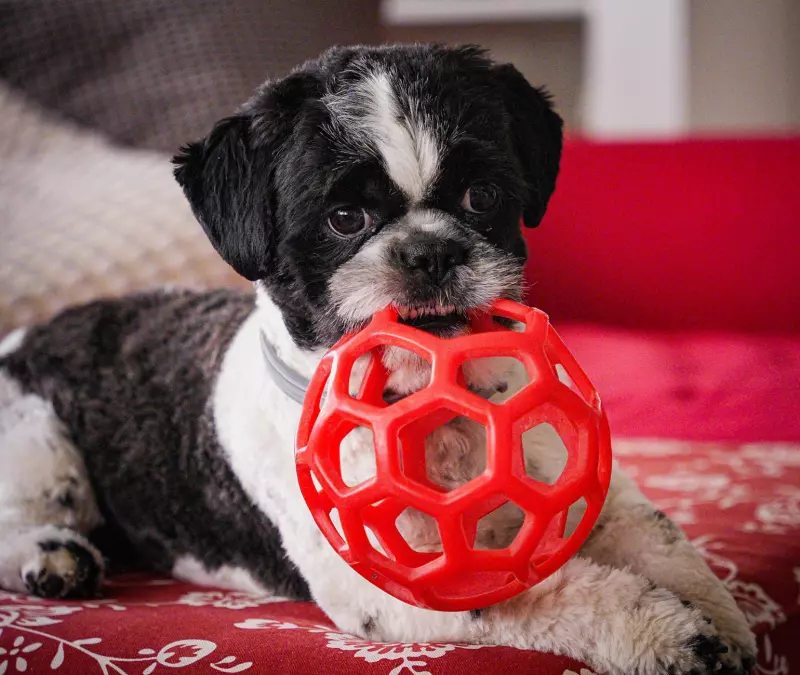
Let's talk about the dark side of dog toys. Just because a toy is sold at a major pet store does not mean it is safe. For example, did you know that standard tennis balls are actually terrible for dogs? The yellow felt coating acts like sandpaper. When a dog carries a sandy tennis ball around, the abrasive grit slowly grinds down their tooth enamel over time. If your dog loves fetch, swap out real tennis balls for smooth rubber balls designed specifically for dogs.
Another hazard is size. Never buy a toy that can fit completely behind your dog's rear teeth. If they are chasing a ball and catch it mid-air, a ball that is too small can easily slide down their throat and block their airway. Always err on the side of caution and buy a size larger than you think you need.
To keep things fresh and stop your dog from getting bored, do not leave all their toys out at once. Keep a rotation. I leave three toys out at a time and keep the rest in a closed closet. Every Sunday, I swap them. When Buster sees a toy he hasn't seen in two weeks, he reacts like it is the greatest day of his life. It saves me money, and it keeps his mind sharp. Pay attention to how they play, respect their instincts, and remember that sometimes, the best toy is just a cardboard box they are allowed to rip to shreds while you watch.