
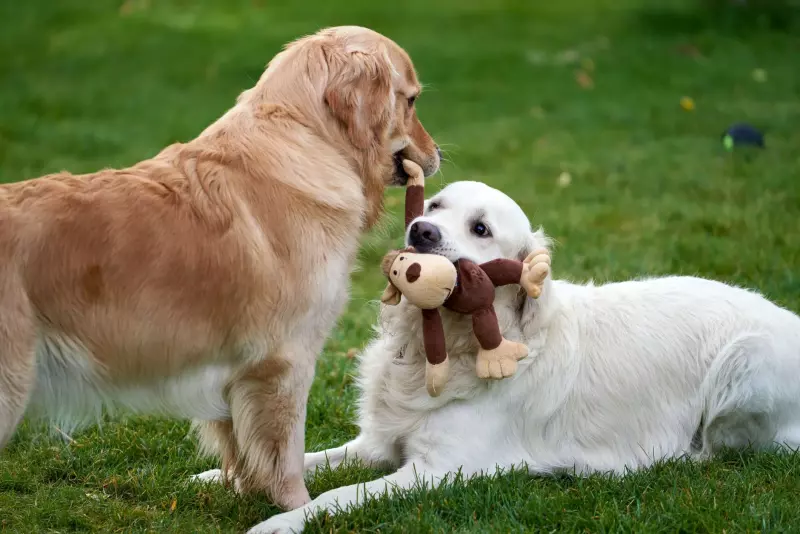
My golden retriever, Barnaby, is a menace. If you gave him an industrial-grade steel anvil, he'd somehow find a way to splinter it into a million pieces by lunchtime. That's the reality of living with a power chewer, and it's exactly why I ended up spending literally thousands of dollars over the last decade trying to figure out the wild, unregulated, and occasionally hazardous world of dog toys. We see those pristine aisles at the pet store and think, "Oh, that cute plush hedgehog will be perfect!" Two minutes later, you're picking synthetic stuffing out of your dog’s teeth and praying you don't have to visit the emergency vet.
Let's talk about why we buy these things in the first place. It isn't just about keeping them busy so we can take a Zoom call in peace—though, let's be honest, that's a massive part of it. Toys are actually essential cognitive tools. Without them, dogs do what dogs do best when they're bored: they redecorate your house. Your baseboards, the legs of your expensive mid-century modern dining table, your favorite leather boots... they're all fair game.
The Psychological Need for Play (It's Not Just a Luxury)
Dogs don't just want to play; they need to. In the wild, their ancestors spent their days tracking, chasing, grabbing, and tearing. When we bring a dog into our cozy suburban homes, those hardwired predatory sequences don't just vanish. They get bottled up.
If you don't give your dog an outlet for that energy, it manifests as behavior issues. Barking at the mailman? Chewing the drywall? Digging up your hydrangeas? Yep, that's boredom. I've seen so many clients struggle with "hyperactive" dogs when, in reality, the dog just needs twenty minutes of focused, brain-draining toy play. An interactive puzzle toy that forces them to slide compartments to find a piece of kibble can tire a dog out faster than a three-mile run. It's wild but true. Mental exhaustion is a real thing, and it's a lifesaver for high-energy breeds.
Decoding the Main Types of Dog Toys
Not all toys are built for the same job. You can't give a teething puppy a rock-hard nylon bone, and you definitely shouldn't give a Rottweiler a soft squeaky toy unless you want a very expensive five-second show.
Here's how I break down the toy box:
- Chew Toys (The Destructors' Choice): This is where rubber reigns supreme. Think KONG Classic or similar heavy-duty natural rubber compounds. If your dog can chew through black KONG rubber, you might actually have a small bear. I always recommend stuffing these with peanut butter (xylitol-free, please!) or wet food and freezing them. It turns a ten-minute chew session into an hour-long brain workout.
- Interactive and Retrieval Toys: Flirt poles, tennis balls, and chuck-it launchers. These are great for building your bond. One quick warning: standard tennis balls are actually quite abrasive. The yellow felt acts like sandpaper on a dog's teeth over time, wearing down their canines. Look for dog-safe balls made of non-abrasive rubber instead. My dog loves the squeaky rubber ones that bounce erratically. It keeps him guessing.
- Puzzle and Enrichment Toys: These require actual brainpower. From simple snuffle mats where you hide kibble in fabric folds to complex multi-tier plastic puzzles where they have to turn dials and lift cups. I start puppies on easy ones so they don't get frustrated and give up. There is nothing funnier than watching an Aussie shepherd try to smash a puzzle with its paw because it can't figure out the latch.
- Plush and Comfort Toys: Some dogs love to "baby" their toys. They carry them around, sleep with them, and gently lick them. Others see a plush toy and immediately initiate a seek-and-destroy mission to find the squeaker. If your dog is in the latter category, look for "tuff" plushies with reinforced seams and webbing, or just skip plush altogether. It's not worth the risk of intestinal blockage.
The Dirty Secret of the Pet Industry: Materials Matter
Here's something that really fires me up. There is shockingly little regulation when it comes to what materials can be used in pet toys. A lot of cheap stuff imported from overseas is loaded with phthalates, heavy metals, and chemical fire retardants. When your dog chews a toy, their saliva warms up the plastic, making it easier for those chemicals to leach directly into their gums. It's terrifying if you think about it too much.
So, how do you stay safe?
Always look for toys made from natural rubber, organic cotton, or BPA-free TPE (thermoplastic elastomer). If a toy smells incredibly chemical or like artificial vanilla to cover up a bad chemical odor, put it back on the shelf. Your nose is a great first line of defense.
Also, size matters. Always size up if you're on the fence. A toy that's too small is a choking hazard. My friend's Lab almost choked on a medium-sized ball because it got lodged in the back of his throat during a high-speed game of fetch. Fortunately, they got it out, but it was a terrifying lesson. If your dog can fit the entire toy behind their canine teeth, it is too small.
How to Keep Your Dog from Getting Bored of Their Toys
Have you ever bought a shiny new toy, watched your dog play with it for five minutes, and then never look at it again? It's incredibly frustrating. But here's a trick I learned years ago: toy rotation.
Don't leave all fifteen of your dog's toys scattered across the living room floor. To them, those toys become part of the background noise, just like the couch or the rug. Instead, keep only three or four out at a time. Put the rest in a closed bin in the closet. Every Sunday, swap them out. When you pull that old rubber bone out of the closet after two weeks, your dog will react like you just brought home the greatest invention in human history. It's a simple hack, but it saves you a ton of money and keeps their minds sharp.
I also love combining toys. Put a chew stick inside a rubber toy. Put a small ball inside a larger open-lattice rubber ball. Make them work for it. Dogs are natural problem solvers, and when we make life too easy for them, they get anxious.
The Lifespan of a Toy: When to Throw It Away
We all hate throwing away something we spent twenty bucks on, but you have to know when to call it. If a rubber toy has chunks missing, it’s garbage. If a plush toy is spilling its guts, it’s garbage. If a rope toy is starting to unravel, throw it out immediately. Those cotton strings can tangle up in their intestines like a knot, causing a horrific condition called a linear foreign body. It's incredibly dangerous and requires major surgery to fix. I actually stopped buying rope toys altogether for this exact reason.
At the end of the day, finding the perfect mix of toys for your dog takes a bit of trial and error. You'll buy some duds. You'll buy things you think are indestructible only to find them in shreds within minutes. But once you find that sweet spot—the toy that keeps them focused, happy, and safe—it is worth every single penny. Watch how your dog plays. Are they a shredder, a chaser, a cuddler, or a thinker? Let their natural instincts guide your wallet.