
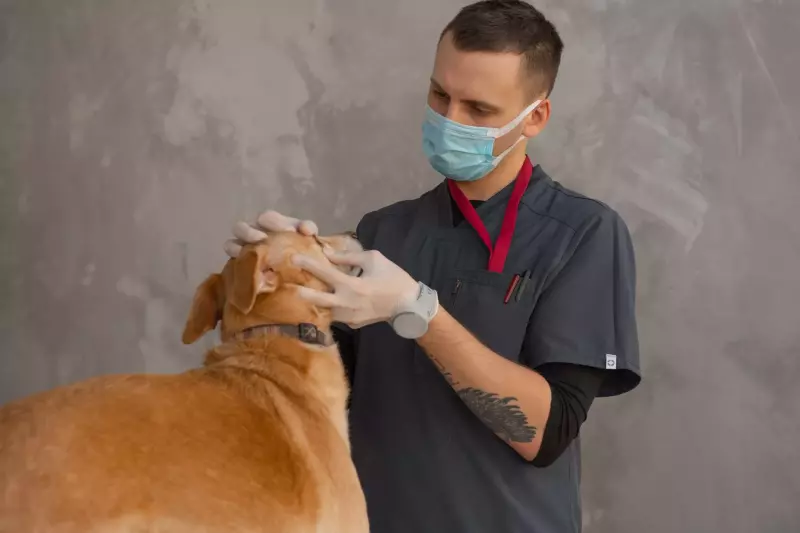
I still remember Barnaby. He was a ninety-pound Bullmastiff who looked like he could pull a semi-truck, but he was currently shivering like a leaf under my clinic's reception desk because the floor transition from carpet to tile felt like lava to him. His owners were exhausted. They had hired three different trainers, spent thousands of dollars, and were on the verge of surrendering him. That's when they found me. As a veterinary behaviorist, my days don't look like typical vet visits. We aren't just checking reflexes or giving vaccines. We're looking at the messy, complex intersection of neuroscience, medicine, and environment. People often confuse us with trainers, but the difference is night and day.
The Medical Core of Behavior
Trainers teach behaviors. They show your dog how to roll over, heel, or sit. We, on the other hand, look at why your pet is reacting in the first place. I hold a Doctorate in Veterinary Medicine, followed by years of residency and rigorous board exams. Why? Because behavior is biology. Think about it. If you have a severe panic disorder, you don't need a life coach to teach you how to stand up straight. You need a medical professional who understands how serotonin, dopamine, and cortisol interact in your brain. Pets are no different. When Barnaby looked at that tile floor, his amygdala was hijacking his entire nervous system. No amount of high-value chicken treats was going to override that survival response without addressing his underlying neurochemistry.
Case Study: Chloe's Silent War
Let's talk about Chloe, a gorgeous three-year-old Siamese. Her owners brought her to me because she had literally licked her belly raw. She looked like she had a terrible skin infection, but every test her primary vet ran came back clean. They tried steroids, special diets, and cone collars. Nothing worked. Chloe was miserable, and her family was stressed. When I sat down with them, we didn't just look at her skin. We mapped out her entire day. We realized Chloe's grooming escalated every afternoon at 3:00 PM. Why? Because that was when the neighbor's kids came home and played basketball right outside her favorite window. To Chloe, that bouncing ball sounded like an invading army. Her licking wasn't a skin issue; it was an obsessive-compulsive coping mechanism to soothe her soaring cortisol. We started Chloe on a low dose of a selective serotonin reuptake inhibitor (SSRI) combined with a strict environmental modification plan. We blocked her view of that specific window during the afternoon, set up a white noise machine, and gave her food puzzles to redirect her focus. Within six weeks, her fur started growing back. Today, she's completely off the meds and calm.
Why 'Unprovoked' Aggression is a Myth
I hear this phrase every single week: "He just snapped out of nowhere." Let me be blunt. Animals almost never snap out of nowhere. They give us dozens of subtle warnings—a stiffened tail, a slight lip curl, a brief freeze, or dilated pupils. But we miss them because we're busy or simply don't know how to read animal body language. Take Buster's case. He was a sweet-natured Golden Retriever who suddenly bit his owner's teenage son. The family was heartbroken and terrified. They thought they'd have to euthanize him. When they came to my office, I didn't start with training commands. I ran a complete orthopedic and neurological workup. Turns out, Buster was developing early-onset osteoarthritis in his hips. The teenager had plopped down next to Buster on the rug, accidentally nudging his sore hip. Buster didn't bite because he was "dominant" or "mean." He bit because he was hurting and couldn't say, "Hey, that hurts, please move." We managed his pain with targeted anti-inflammatories, modified how the kids interacted with him, and the aggression vanished.
Inside the Veterinary Behaviorist’s Toolkit
What actually happens when you book a consult with us? It's not a rushed fifteen-minute check-up. We spend hours gathering details. Here is what we typically unpack:
- A deep dive into medical history: We rule out thyroid issues, chronic pain, and neurological anomalies because physical pain often manifests as sudden aggression or fear.
- An environmental audit: We look at your home layout, daily routines, and even the noises outside your walls that might trigger sensory overload.
- An analysis of body language: I ask clients to film their pets during trigger moments so we can dissect the microscopic shifts in their posture, ear position, and muscle tension.
- A customized psychopharmacology plan: If needed, we prescribe medications to lower the pet's anxiety threshold so learning can actually happen.
The Truth About Behavioral Medication
There's a lot of stigma around putting pets on meds. People worry they'll turn their dog into a "zombie" or that they're taking the easy way out. I want to bust that myth right now. We don't use medications to sedate animals. We use them to clear the mental fog of panic so the animal can finally process training. If your dog is in a constant state of terror, their brain cannot learn. Medication opens the window of trainability. It's about giving them back their quality of life, not drugging them into submission.
When we treat the mind of a dog or cat, we are not looking to control them. We are seeking to understand what they are desperately trying to communicate through their panic.
If you're struggling with a pet who is anxious, reactive, or seemingly unpredictable, please know you aren't alone. And more importantly, your pet isn't doing this to spite you. They are simply trying to survive in a world they don't fully understand. Finding a board-certified veterinary behaviorist might feel like a big step, but it's often the single best decision you can make for the animal you love. We don't just fix behaviors; we rebuild the fragile trust between you and your pet.